" height="8px" id="x_HOY8XyM" transform="translate(6.008 4)" width="4.015649999999994px"/></svg>)
" height="7.5px" id="CSiwjDzLM" transform="translate(5 4)" width="6.570300102233887px"/></svg>)
" height="5.684156997170297px" id="FuNtYuhE0" transform="translate(4 5.16)" width="8px"/></svg>)
" height="8px" id="MlOPP20GY" transform="translate(4 4)" width="8px"/></svg>)
Time is valuable in busy veterinary clinics like yours. Yet one of the most common and costly issues facing the industry isn’t medical at all: it’s poor client communication.
From vet team communication errors to clients misunderstanding vet recommendations, even small breakdowns in how information is shared can lead to major consequences. While the impact may not be as visible as a patient's infection or injury, the damage of poor communication can be significantly harmful—to pet care, clinic revenue, and your team’s well-being.
Why miscommunication in veterinary clinics is so costly
Miscommunication in veterinary clinics can come in many forms, and staying vigilant to these signs is key to addressing and improving your client communication. For example:
A receptionist misunderstands a doctor’s instructions about a patient follow-up.
A technician assumes the pet parent has already received post-op care instructions.
A doctor explains a treatment plan once, but the client leaves unsure about the cost or urgency.
Common vet team communication errors that hurt patient care
Even the most minor communication breakdowns can have major consequences for pets, clients, and the clinic.
Misheard or incomplete doctor instructions: If a technician misinterprets a medication dose or prep instruction, patient safety may be compromised.
Lost or unrecorded follow-up tasks: Without a clear process, follow-up calls, lab results, and check-ins can fall through the cracks.
Gaps between in-person and digital updates: Details shared in an exam room don’t always make it into the clinic’s records or client messages, causing inconsistencies.
How clients' misunderstanding of their vets' advice can lead to lost trust
A client misunderstanding their vet’s recommendations isn’t just inconvenient—it can mean delayed treatment, worsening conditions, and lower compliance.
Missed treatments and declined services: When pet parents don’t fully grasp why a procedure or test is necessary, they’re more likely to decline it.
Confusion around pricing and urgency: Without clear and consistent explanations, clients may see recommendations as simply optional or too overpriced.
The role of clear educational resources: Providing easy-to-read handouts or digital guides helps pet parents feel confident in their decisions.
Root causes of communication breakdowns in veterinary clinics
As you know, veterinary practices are complex environments with many moving parts. Common reasons for miscommunication include:
Time pressure: Fully booked schedules leave little room for clarifying questions.
Lack of clear processes: Information gets lost in translation without standardized workflows.
Technology gaps: Relying on physical sticky notes or verbal updates invites more room for errors.
Emotional factors: Stressful situations can make both team members and pet parents miss important pet care details.
The financial and emotional toll of poor communication
Poor client communication in veterinary clinics can lead to:
Additional care for preventable complications (often at no charge).
Lower compliance rates and reduced revenue.
Increased turnover from burned-out staff.
While these hidden costs may not show up on an actual invoice, they negatively impact clinic profitability over time.
How PetDesk reduces miscommunication in veterinary clinics
By providing a single platform for client communication, payments, appointment reminders, follow-ups, and patient updates, PetDesk’s veterinary-specific communication tools prevent costly miscommunication in veterinary clinics.
Transparent veterinary payments: Request pre-appointment deposits or full payments to give pet parents a better understanding of the costs of care.
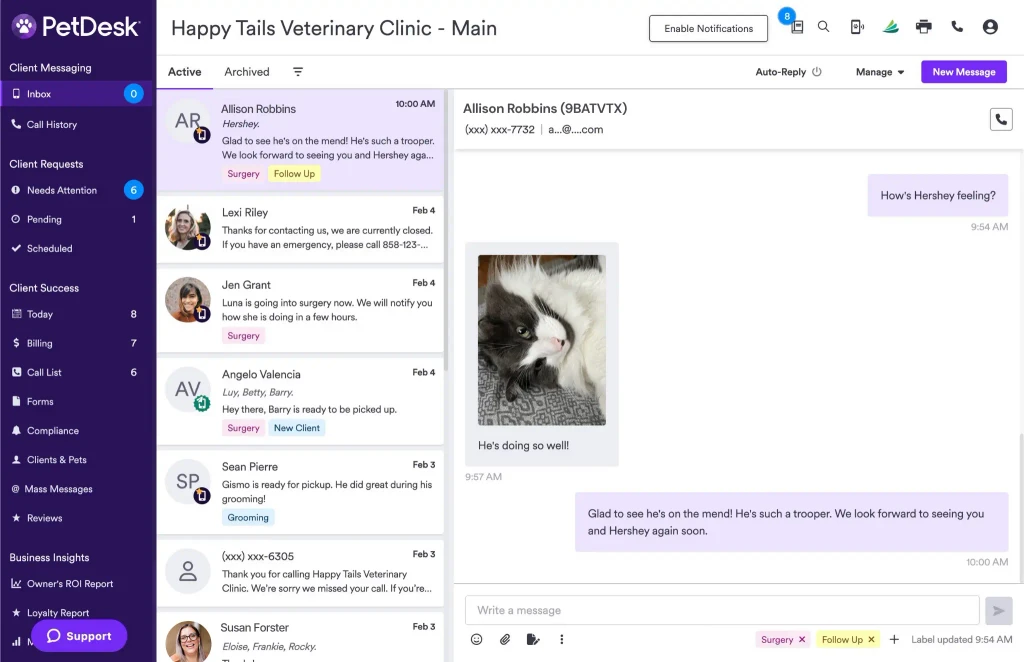
Centralized veterinary messaging: All client interactions stay in one place, so nothing is missed.
Automated veterinary reminders: Reduce no-shows and forgotten instructions.
Easy-to-use digital veterinary forms: Send customizable forms to new or existing clients to easily receive their information, eliminating the communication risks of deciphering handwriting and keeping up with paperwork.
Clear client education: Use PetDesk’s client-facing mobile app or your done-for-you veterinary website to provide consistent, easy-to-understand resources that improve compliance.
Poor communication is one of the most preventable threats to a veterinary clinic’s success. Knowing the signs and addressing it head-on will help your communication flow smoothly, leading to better patient care, more loyal clients, and less stressed veterinary teams. With the right strategies and tools—like PetDesk Communications—you can turn communication from a liability into a competitive advantage.
Poor Communication in Veterinary Practices FAQs
Q. Why is poor communication such a costly issue in veterinary practices?
A. Poor communication may not seem as urgent as a medical problem, but it can be just as damaging. Misunderstandings between staff or confusion for clients can lead to missed treatments, unnecessary complications, and frustrated pet parents. Over time, this erodes trust, reduces revenue, and increases stress for the entire team.
Q. What are some common communication errors within veterinary teams?
A. Communication breakdowns can happen when instructions are misheard, follow-up calls are forgotten, or details shared in the exam room never make it into the records. Even small slips like these can compromise patient care and leave clients feeling uncertain.
Q. How does a client's misunderstanding of veterinary advice impact care?
A. When pet parents don’t fully understand their veterinarian’s recommendations, they may delay or decline important treatments. This can lead to worsening health conditions for their pets and create a sense of distrust or confusion about the value of care.
Q. What are the root causes of communication breakdowns in clinics?
A. Veterinary clinics are fast-paced and emotionally charged environments, which makes communication more challenging. Tight schedules, lack of standardized processes, reliance on verbal updates, and stressful situations can all contribute to important details being overlooked or misunderstood.
Q. How do poor communication habits affect clinic revenue?
A. The financial impact often hides in plain sight. Clinics may provide extra care for preventable complications at no charge, lose revenue when clients decline services, or face staff turnover from burnout. These hidden costs chip away at profitability over time.
Q. What steps can clinics take to improve communication?
A. Improving communication starts with consistency. Creating clear checklists, training the whole team to use client-friendly language, and using tools that centralize updates all help ensure everyone—staff and clients alike—has the same accurate information.
Q. How can tools like PetDesk help reduce miscommunication?
A. PetDesk makes it easier to communicate clearly and consistently. With features like centralized messaging, automated reminders, digital forms, and client-friendly educational resources, clinics can reduce errors, improve compliance, and strengthen client relationships—all while saving valuable time.
The State of Veterinary Practice Management Report
We surveyed 400 veterinary professionals in North America, revealing a significant gap between how efficient practices believe they are, and how efficient they actually are. Download the data to prepare your practice for the next phase of veterinary success in 2026 and beyond.