Scribe now knows your schedule. Just tap and talk! Learn more >
Veterinary Software Guide
The importance of a veterinary mobile app
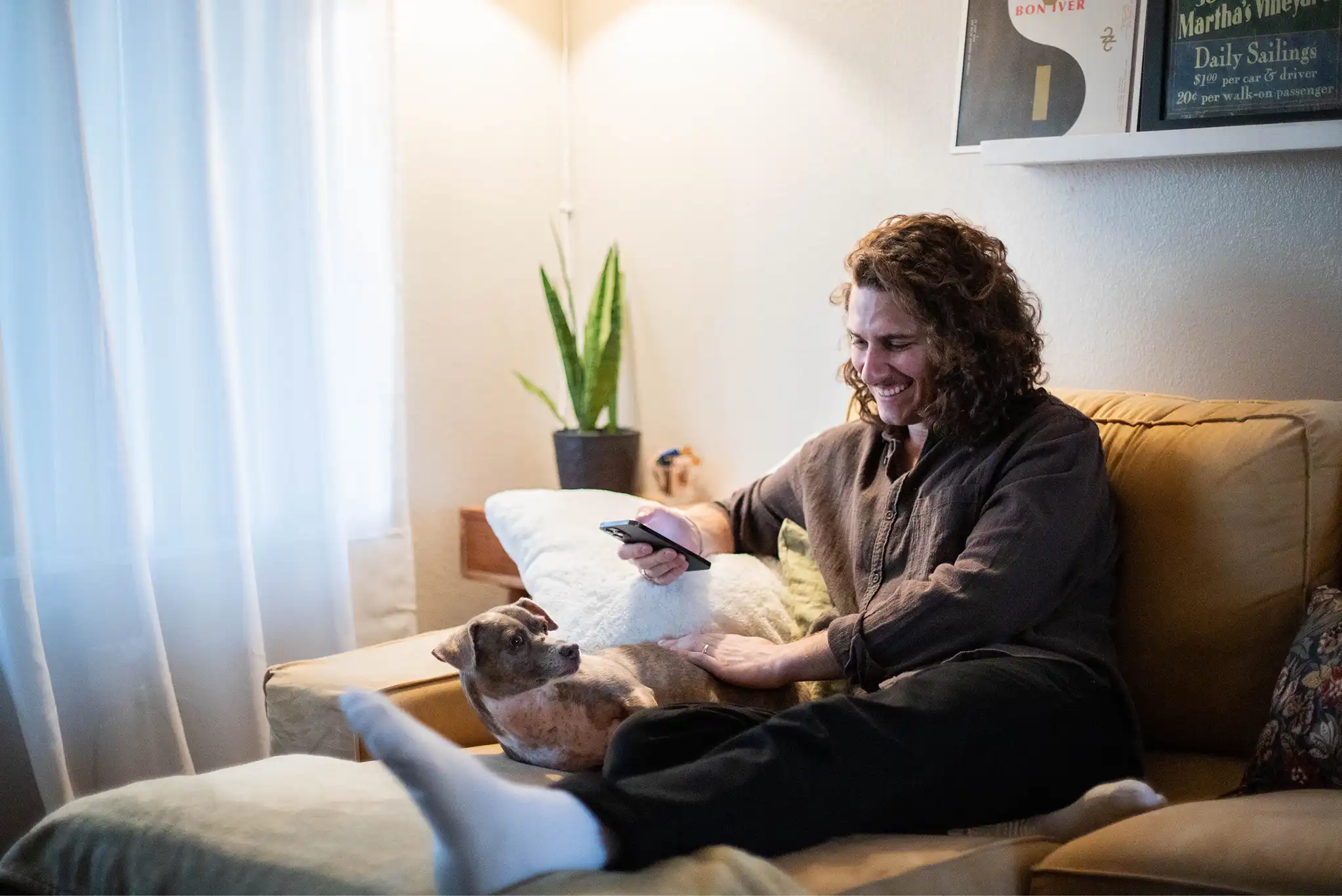
Veterinary practices are facing rising client expectations, staffing constraints, and increasing pressure to improve care compliance without adding administrative burden. A veterinary mobile app connected to a centralized team dashboard addresses these challenges by improving accessibility, automating routine communication, and strengthening the ongoing relationship between vet teams and pet parents.
Practices that offer client-facing mobile apps have reported saving more than five hours per day for their staff, a direct result of pet parents self-serving and getting quick answers to non-urgent questions without having to call the vet.¹ When paired with a complete client communication platform, veterinary teams are able to further simplify communication, increase appointments, drive client loyalty, and improve treatment compliance.
In this veterinary software guide, we’re covering everything you need to know about veterinary mobile apps to give you a clear understanding of how mobile engagement is no longer optional—it’s now a critical component of attracting new clients, retaining current clients, and increasing clinic revenue.
The importance of a veterinary mobile app
" height="13.333335000000005px" id="zJRHdUNxM" transform="translate(4 1.333)" width="8px"/></svg>)
" height="13.333325000000002px" id="Kf6vwCqaO" transform="translate(1.334 1.333)" width="13.33331499999997px"/><path d="M 5.134 0.159 L 2.154 3.139 L 0.841 1.826 C 0.746 1.737 0.621 1.689 0.491 1.692 C 0.362 1.694 0.238 1.746 0.146 1.838 C 0.055 1.93 0.002 2.053 0 2.183 C -0.002 2.312 0.046 2.438 0.134 2.532 L 1.801 4.199 C 1.895 4.293 2.022 4.345 2.154 4.345 C 2.287 4.345 2.414 4.293 2.508 4.199 L 5.841 0.866 C 5.89 0.82 5.929 0.765 5.957 0.703 C 5.984 0.642 5.999 0.576 6 0.509 C 6.001 0.442 5.989 0.375 5.964 0.313 C 5.938 0.25 5.901 0.194 5.854 0.146 C 5.806 0.099 5.75 0.062 5.687 0.036 C 5.625 0.011 5.558 -0.001 5.491 0 C 5.424 0.001 5.358 0.016 5.297 0.043 C 5.235 0.071 5.18 0.11 5.134 0.159 Z" fill="rgb(222, 239, 145)" height="4.345329770034447px" id="Rsc86Zs4i" transform="translate(5.013 5.821)" width="6.000008611866147px"/></svg>)
" height="12.76696983398905px" id="qHJQolcQV" transform="translate(1.333 1.566)" width="13.33137679570316px"/></svg>)
" height="13.333986657468545px" id="WDnTzmdN7" transform="translate(1.334 1.333)" width="13.333315016544235px"/></svg>)
Section #1
Why a veterinary mobile app matters
The digital expectations of today’s veterinary clients²
Pet parents increasingly expect their veterinary experience to match the convenience of other healthcare and service industries. As these expectations continue to evolve, here are important statistics you need to be aware of:
78% of pet owners say it is important to be able to book veterinary appointments anytime, on any device.
87% consider appointment and vaccine reminders an essential service.
57% report experiencing difficulty booking appointments with their veterinary clinic.
31% of pet owners say they are likely to switch clinics if their digital expectations are not met—rising to 40% among younger pet owners.
These findings highlight a critical blind spot for practices relying primarily on phone-based workflows: digital friction in the client experience directly contributes to client attrition.
LIVE DIGITAL EVENT RECORDING
Why a client-facing app is now essential for veterinary practices
Don’t miss out! Watch the live recording to hear how the PetDesk app helps clinics meet rising client expectations while simplifying communication, reducing phone volume, and creating a smoother experience for clients and staff.
Passcode: ^&?5=I2E
Section #2
Key features of an effective veterinary mobile app
" height="12px" id="DMgA114AS" transform="translate(2 2)" width="12px"/></svg>)
Appointment scheduling and requests
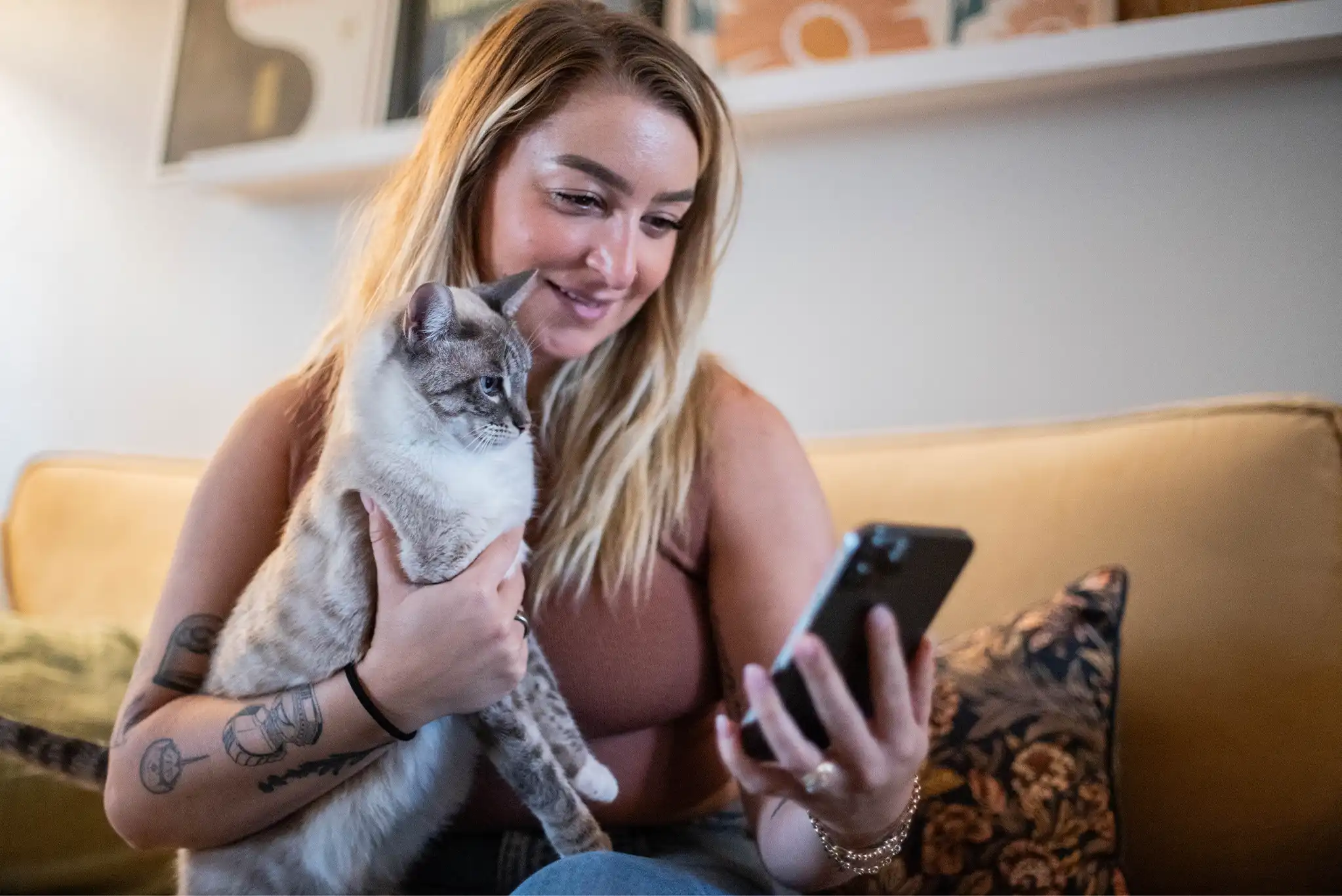
Veterinary mobile apps provide pet parents the ability to request or book appointments 24/7, without calling the practice.
Real-world impact:³
In a study with Westside Veterinary Service, the practice used the convenience of in-app appointment management and online booking to:
Generate 500+ online appointments in just four months
Book 33.4% of appointments made outside normal business hours
Secure 21% of online bookings from new clients
This highlights the importance of offering round-the-clock appointment management to not only improve convenience, but also capture demand that would otherwise be missed—particularly after hours.
" height="13.333359999999994px" id="TskCOMC1T" transform="translate(2.667 1.333)" width="10.666640000000006px"/></svg>)
Pet medical records and data access
Mobile apps allow pet parents to view vaccination history, upcoming services, and appointment summaries in one centralized location, providing transparency that helps clients better understand and comply with care recommendations.
Practices consistently report that when clients can easily see patient records and what their pet is due for, compliance conversations become proactive rather than reactive.
" height="12.999847854356767px" id="QhyQPX9T7" transform="translate(2.001 1.335)" width="11.998835347802103px"/></svg>)
Automated reminders and notifications
Automated push notifications and text reminders support:
Appointment confirmations
Preventive care reminders
Medication and refill prompts
Real-world impact:⁴
Stevenson Village Veterinary Hospital has simplified their operations and improved care by offering automated reminders through their mobile app, reporting:
14,136 routine appointment messages were sent to clients, and 8,029 were received from clients—no phone calls required.
80% of frequent visitors (i.e., clients with 5+ visits in 18 months) were PetDesk app users, indicating strong adoption and ongoing engagement.
Automated reminders reduce missed appointments while reinforcing the perception that the practice is attentive, timely, and organized.
" height="12.002322048672745px" id="vJdq14CcN" transform="translate(1.331 2)" width="13.377027343066183px"/></svg>)
Two-way communication with the practice
One of the many benefits of veterinary mobile apps, in-app messaging and texting capabilities allow practices to communicate efficiently without relying on phone calls. This ultimately helps to improve responsiveness while protecting valuable time for staff.
Real-world impact:⁵
By implementing two-way communication through the mobile app, the team at Hometown Veterinary Care has spent less time on the phone, allowing them to shift their focus toward other important tasks.
Staff now spend 30% less time on the phone than they previously did.
Client satisfaction has increased due to the ability for pet parents to simply text the clinic, send photos, and even pay bills.
This reclaimed time can be redirected toward patient care, client education, and higher-value interactions.
" height="15.327290589509358px" id="b0L9cRQIy" transform="translate(2.001 0.331)" width="11.999238633488416px"/></svg>)
Medication refill requests
In-app refill requests eliminate phone tag and reduce friction for clients managing chronic medications, improving adherence while decreasing front-desk workload. Practices offering mobile refill requests frequently report faster turnaround times and fewer manual errors, contributing to better client satisfaction.
" height="12px" id="WCFlm7JNA" transform="translate(2 2)" width="12px"/></svg>)
Pet health to-do lists and ongoing care tracking
Many veterinary mobile apps include to-do lists that help clients manage medications, follow-ups, and preventive care tasks. Providing this level of personalization and convenience supports long-term compliance by keeping care needs visible and actionable.
" height="13.9939840076377px" id="phSAH67bZ" transform="translate(1.335 1.336)" width="13.971870413562598px"/></svg>)
Value-added services and loyalty engagement
Mobile apps can connect clients to additional services such as:
Educational content
Pet insurance information
Product purchasing links
These features extend the client relationship beyond the exam room, and work to reinforce long-term engagement and retention.
Section #3
Practice-level benefits
Improved appointment compliance
Automated reminders, easy rescheduling, and convenient digital payment options directly reduce no-shows. In one recent study, a veterinary practice reported 90% fewer no-shows just by providing clients with the ability to pay digitally.⁶
Staff efficiency and burnout reduction
By shifting routine tasks to self-service digital workflows, practices reduce administrative load and support the well-being of the team. Veterinary teams using automated reminder systems report saving more than 40 hours of work from appointment confirmations alone.⁶
Stronger client retention and lifetime value
Pet parents who actively use a veterinary mobile app:
Visit more consistently
Are more likely to follow preventive care recommendations
Report higher satisfaction with communication and access
This translates into higher lifetime client value and stronger word-of-mouth referrals over time.
Section #4
The role of an integrated communication platform
A veterinary mobile app reaches its full potential when paired with a centralized communication platform that syncs with your practice management software, helping to manage communication tools such as:
Automated reminders and confirmations
Two-way texting and mass messaging
User-friendly digital forms
Convenient SMS payments
Client loyalty and engagement tracking
Compliance reports
Section #5
Best practices for successful adoption
If you’re wondering how to get more of your clients to consistently use your mobile app, here are some tips:
"/><stop offset="1" stop-color="rgb(159, 46, 252)"/></linearGradient></defs><path d="M 6.68 4.984 C 8.737 4.984 11.68 8.187 11.68 10.218 C 11.68 11.13 10.977 11.651 9.805 11.651 C 8.529 11.651 7.695 10.999 6.68 10.999 C 5.638 10.999 4.805 11.651 3.529 11.651 C 2.357 11.651 1.679 11.13 1.679 10.218 C 1.679 8.187 4.596 4.984 6.68 4.984 Z M 2.825 4.671 C 3.112 5.583 2.695 6.442 1.94 6.624 C 1.185 6.807 0.351 6.234 0.091 5.322 C -0.196 4.411 0.221 3.551 0.976 3.369 C 1.732 3.187 2.565 3.76 2.825 4.671 Z M 5.039 4.124 C 4.232 4.333 3.32 3.603 3.008 2.457 C 2.721 1.338 3.112 0.244 3.919 0.035 C 4.726 -0.173 5.638 0.556 5.95 1.702 C 6.237 2.822 5.846 3.916 5.039 4.124 Z M 12.357 3.369 C 13.112 3.551 13.529 4.411 13.242 5.322 C 12.982 6.234 12.149 6.807 11.393 6.624 C 10.638 6.442 10.221 5.583 10.508 4.671 C 10.768 3.76 11.602 3.187 12.357 3.369 Z M 8.294 4.124 C 7.487 3.916 7.096 2.822 7.383 1.702 C 7.695 0.556 8.607 -0.173 9.414 0.035 C 10.221 0.244 10.612 1.338 10.326 2.457 C 10.013 3.603 9.102 4.333 8.294 4.124 Z" fill="url(%23q3Emo47ec-3283799645-linear-gradient)" height="11.650519644673675px" id="q3Emo47ec" transform="translate(1.333 2)" width="13.333346607168094px"/></svg>)
Position the app as a care tool: Emphasize health outcomes and convenience, not just technology. With PetDesk, you can request informational brochures and signs to promote the benefits of the mobile app in your practice.
"/><stop offset="1" stop-color="rgb(159, 46, 252)"/></linearGradient></defs><path d="M 4.101 9.183 L 4.095 9.169 C 4.005 9.145 3.915 9.117 3.827 9.087 L 3.82 9.084 C 2.899 8.769 2.1 8.174 1.534 7.382 C 0.968 6.59 0.664 5.641 0.664 4.668 C 0.664 3.473 1.122 2.324 1.943 1.457 C 2.765 0.59 3.888 0.071 5.081 0.007 C 6.274 -0.057 7.446 0.339 8.355 1.113 C 9.265 1.887 9.843 2.981 9.971 4.169 C 10 4.443 9.773 4.668 9.497 4.668 C 9.221 4.668 9.001 4.443 8.964 4.169 C 8.875 3.524 8.616 2.914 8.214 2.402 C 7.812 1.89 7.28 1.495 6.674 1.256 C 6.068 1.018 5.41 0.945 4.766 1.045 C 4.123 1.145 3.518 1.415 3.013 1.827 C 2.508 2.238 2.122 2.777 1.895 3.387 C 1.667 3.997 1.606 4.657 1.718 5.298 C 1.83 5.94 2.11 6.54 2.531 7.037 C 2.952 7.534 3.497 7.911 4.111 8.127 C 4.235 7.848 4.451 7.619 4.723 7.48 C 4.996 7.34 5.307 7.299 5.607 7.362 C 5.906 7.425 6.174 7.59 6.367 7.827 C 6.559 8.065 6.664 8.361 6.664 8.667 C 6.664 8.975 6.558 9.274 6.363 9.513 C 6.168 9.751 5.896 9.915 5.594 9.976 C 5.292 10.036 4.978 9.991 4.706 9.846 C 4.433 9.702 4.22 9.467 4.101 9.183 Z M 3.417 10.003 C 2.631 9.721 1.917 9.268 1.327 8.678 C 0.961 8.72 0.625 8.895 0.38 9.17 C 0.135 9.445 0 9.799 0 10.167 L 0 10.78 C 0 11.162 0.119 11.534 0.34 11.844 C 1.368 13.287 3.051 14.001 5.331 14.001 C 7.611 14.001 9.294 13.286 10.324 11.844 C 10.546 11.534 10.666 11.161 10.666 10.778 L 10.666 10.166 C 10.666 9.769 10.508 9.388 10.227 9.106 C 9.946 8.825 9.565 8.667 9.167 8.666 L 7.664 8.666 C 7.664 9.163 7.506 9.647 7.212 10.047 C 6.918 10.447 6.505 10.744 6.031 10.893 C 5.557 11.042 5.048 11.036 4.578 10.876 C 4.108 10.716 3.702 10.41 3.417 10.003 Z M 7.997 4.668 C 7.997 4.278 7.912 3.893 7.747 3.54 C 7.582 3.187 7.342 2.874 7.043 2.624 C 6.766 2.392 6.444 2.219 6.098 2.115 C 5.752 2.011 5.388 1.979 5.029 2.02 C 4.67 2.061 4.323 2.175 4.009 2.354 C 3.695 2.534 3.421 2.775 3.203 3.064 C 2.986 3.352 2.829 3.682 2.743 4.033 C 2.656 4.384 2.642 4.749 2.702 5.106 C 2.761 5.462 2.892 5.803 3.087 6.108 C 3.282 6.412 3.537 6.674 3.836 6.876 C 4.255 6.526 4.784 6.335 5.331 6.334 C 5.899 6.334 6.421 6.538 6.826 6.876 C 7.187 6.632 7.482 6.303 7.687 5.918 C 7.891 5.533 7.997 5.104 7.997 4.668 Z" fill="url(%23V9P2Isoj6-4203668546-linear-gradient)" height="14.001140234152478px" id="V9P2Isoj6" transform="translate(2.669 0.666)" width="10.665993333333365px"/></svg>)
Train the entire team: Staff adoption and expertise directly influence client adoption.
"/><stop offset="1" stop-color="rgb(159, 46, 252)"/></linearGradient></defs><path d="M 13.271 1.071 C 13.313 1.211 13.333 1.353 13.333 1.499 L 13.333 9.15 C 13.333 9.384 13.279 9.614 13.174 9.822 C 13.069 10.031 12.917 10.212 12.73 10.352 C 12.543 10.492 12.326 10.586 12.096 10.626 C 11.866 10.667 11.63 10.654 11.406 10.587 L 7.73 9.494 C 7.47 10.025 7.041 10.454 6.51 10.714 C 5.98 10.975 5.378 11.052 4.799 10.933 C 4.22 10.814 3.696 10.507 3.311 10.059 C 2.926 9.61 2.7 9.047 2.67 8.457 L 2.667 8.323 L 2.666 7.99 L 1.073 7.516 C 0.763 7.424 0.491 7.234 0.297 6.975 C 0.104 6.716 0 6.401 0 6.077 L 0 4.57 C 0 4.247 0.105 3.932 0.298 3.673 C 0.492 3.414 0.763 3.225 1.073 3.133 L 11.407 0.062 C 11.788 -0.051 12.198 -0.008 12.548 0.181 C 12.898 0.37 13.158 0.69 13.271 1.071 Z M 3.666 8.287 L 3.667 8.323 C 3.666 8.685 3.784 9.038 4.002 9.327 C 4.22 9.617 4.527 9.827 4.876 9.927 C 5.224 10.026 5.596 10.01 5.934 9.879 C 6.272 9.749 6.558 9.511 6.749 9.203 Z" fill="url(%23EWm5t9yyD-2353300935-linear-gradient)" height="10.987487438048117px" id="EWm5t9yyD" transform="translate(1.333 2.677)" width="13.333336242931226px"/></svg>)
Promote at key touchpoints: Check-in, checkout, reminders, and post-visit follow-ups.
"/><stop offset="1" stop-color="rgb(159, 46, 252)"/></linearGradient></defs><path d="M 11.316 4.971 L 11.316 4.935 C 11.313 4.28 11.181 3.632 10.927 3.029 C 10.672 2.425 10.3 1.878 9.833 1.419 C 9.366 0.96 8.812 0.599 8.204 0.355 C 7.596 0.112 6.946 -0.009 6.291 0.001 C 6.207 0.003 6.128 0.038 6.07 0.098 C 6.013 0.159 5.981 0.24 5.982 0.323 L 5.982 5.001 C 5.982 5.089 6.018 5.174 6.08 5.236 C 6.143 5.299 6.227 5.334 6.316 5.334 L 10.992 5.334 C 11.166 5.334 11.312 5.2 11.315 5.025 Z M 4.982 1.667 C 4.983 1.624 4.975 1.58 4.958 1.54 C 4.942 1.5 4.917 1.464 4.886 1.433 C 4.855 1.403 4.817 1.38 4.777 1.364 C 4.736 1.349 4.693 1.342 4.649 1.345 C 3.994 1.391 3.354 1.565 2.767 1.859 C 2.179 2.152 1.655 2.558 1.225 3.054 C 0.355 4.055 -0.081 5.361 0.012 6.684 C 0.106 8.007 0.72 9.238 1.722 10.108 C 2.723 10.978 4.029 11.414 5.352 11.321 C 5.41 11.047 5.536 10.792 5.719 10.58 C 5.901 10.367 6.135 10.205 6.397 10.106 C 6.659 10.008 6.942 9.977 7.219 10.017 C 7.496 10.057 7.758 10.166 7.982 10.334 L 7.982 9.667 C 7.982 9.444 8.027 9.224 8.114 9.018 C 8.201 8.813 8.328 8.627 8.488 8.472 C 8.648 8.316 8.837 8.195 9.045 8.114 C 9.253 8.033 9.475 7.995 9.698 8.001 C 9.849 7.571 9.941 7.123 9.971 6.668 C 9.973 6.624 9.967 6.581 9.951 6.54 C 9.936 6.499 9.913 6.462 9.883 6.431 C 9.852 6.4 9.816 6.375 9.776 6.358 C 9.736 6.341 9.693 6.333 9.649 6.334 L 5.649 6.334 C 5.472 6.334 5.303 6.264 5.178 6.139 C 5.053 6.014 4.982 5.844 4.982 5.667 Z M 11.316 7.667 C 11.316 7.402 11.421 7.148 11.609 6.96 C 11.796 6.773 12.051 6.667 12.316 6.667 C 12.581 6.667 12.835 6.773 13.023 6.96 C 13.21 7.148 13.316 7.402 13.316 7.667 L 13.316 13.001 C 13.316 13.266 13.21 13.52 13.023 13.708 C 12.835 13.895 12.581 14.001 12.316 14.001 C 12.051 14.001 11.796 13.895 11.609 13.708 C 11.421 13.52 11.316 13.266 11.316 13.001 Z M 9.649 8.667 C 9.384 8.667 9.129 8.773 8.942 8.96 C 8.754 9.148 8.649 9.402 8.649 9.667 L 8.649 13.001 C 8.649 13.266 8.754 13.52 8.942 13.708 C 9.129 13.895 9.384 14.001 9.649 14.001 C 9.914 14.001 10.169 13.895 10.356 13.708 C 10.544 13.52 10.649 13.266 10.649 13.001 L 10.649 9.667 C 10.649 9.402 10.544 9.148 10.356 8.96 C 10.169 8.773 9.914 8.667 9.649 8.667 Z M 6.982 10.667 C 6.717 10.667 6.463 10.773 6.275 10.96 C 6.088 11.148 5.982 11.402 5.982 11.667 L 5.982 13.001 C 5.982 13.266 6.088 13.52 6.275 13.708 C 6.463 13.895 6.717 14.001 6.982 14.001 C 7.248 14.001 7.502 13.895 7.69 13.708 C 7.877 13.52 7.982 13.266 7.982 13.001 L 7.982 11.667 C 7.982 11.402 7.877 11.148 7.69 10.96 C 7.502 10.773 7.248 10.667 6.982 10.667 Z" fill="url(%23m8TMP43pJ-2949268459-linear-gradient)" height="14.00050183137258px" id="m8TMP43pJ" transform="translate(2.018 1.333)" width="13.315702199935913px"/></svg>)
Track engagement metrics: Monitor app usage, appointment booking behavior, and reminder performance.
Section #6
Take your practice to the next level with an effective veterinary mobile app
Real-world data makes it clear: veterinary mobile apps are no longer a “nice-to-have.” Practices that adopt mobile engagement supported by an integrated communications platform see:
More appointments booked (including after hours)
Higher compliance and fewer no-shows
Significant staff time savings
Stronger client loyalty and retention
By meeting pet parents where they are (i.e., on their mobile devices) veterinary teams can deliver better pet care, operate more efficiently, and build long-lasting relationships with their clients.