" height="8px" id="x_HOY8XyM" transform="translate(6.008 4)" width="4.015649999999994px"/></svg>)
" height="7.5px" id="CSiwjDzLM" transform="translate(5 4)" width="6.570300102233887px"/></svg>)
" height="5.684156997170297px" id="FuNtYuhE0" transform="translate(4 5.16)" width="8px"/></svg>)
" height="8px" id="MlOPP20GY" transform="translate(4 4)" width="8px"/></svg>)

Picture this: it's 9am and your front desk already has three people on hold, two voicemails to return, and a lobby full of clients waiting to check in. The phones are ringing. The team is moving. And somehow, nobody has had a chance to catch their breath.
If that scene is familiar, you're not running a chaotic practice. You're running a busy one—and the phone is eating away at your routine.
The question most practice managers haven't had time to sit down and answer: how many hours, exactly, is your team losing to the phone every week? When you do the math, the number may be higher than you think.
The hidden cost of high phone volume for veterinary practices
Appointment scheduling is the single most common reason clients call a veterinary practice. Not urgent medical questions. Not billing disputes. It’s scheduling. The kind of request that, with the right setup, doesn't need a human being to handle at all.
A typical scheduling call runs 3 to 5 minutes: finding the right appointment slot, confirming the pet's information, reading back the time, saying goodbye. At 30 scheduling calls a day, that's 2 hours of your front desk's time. Every day. Just on booking.
That's before you count hold time for callers who couldn't get through. Before you count the callbacks for people who left voicemails during lunch. Before you count the no-show follow-ups, the reminder calls that go to voicemail, the 'quick questions' that aren't quick.
Add it up across a week and you're looking at 10 or more hours of staff time spent on tasks that are, in a meaningful sense, optional—things that could happen another way if the systems existed to support them.
Mountains of manual tasks can be devastating to staff morale
Phone volume doesn't just cost hours. It has a quality cost that's harder to measure but just as real.
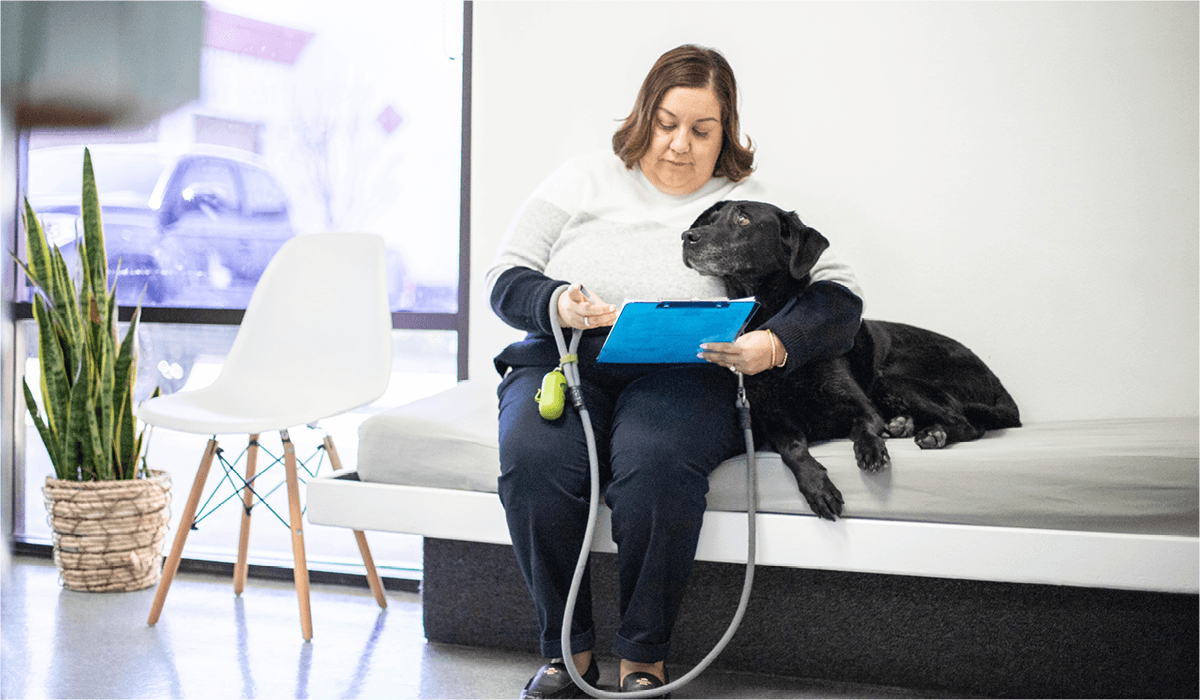
The client standing at your front desk, checking in for an appointment, is competing for attention with everyone on hold. The staff member who should be confirming their pet's history, answering their questions, and making them feel welcome is instead managing a queue. The check-in experience (the first impression of every visit) gets rushed.
Clinical tasks get deferred. The callback that was supposed to happen at 10am gets pushed to 11, then to after lunch, then to tomorrow. The follow-up that was supposed to close the loop on a recent visit sits in someone's mental to-do list, not a completed task.
And the staff? They're not doing this because they're disorganized. They're doing it because the volume is genuinely too high for the system they're working with. The stress is real. The negative staff morale impact is real. And it compounds over time.
The simple shift: let clients schedule themselves with online booking
Here's what changes when you add online booking: the appointments that were generating calls start happening without calls.
40% of online bookings happen after hours—late evenings, weekends, the windows when your phones aren't staffed and appointment requests used to evaporate into voicemail. Those are real appointments that would otherwise go unbooked, captured automatically without anyone on your team doing a thing.
Clients who book themselves are also more likely to show up. The act of choosing a time and confirming it creates a different kind of commitment than being put into a slot by a receptionist over the phone. Confirmation texts go out automatically. The client acknowledges. The no-show rate drops.
And because PetDesk Direct Booking integrates directly with your PIMS, there's no double calendar, no manual entry, no reconciling two systems at the end of the day. A pet parent books online; it shows up in your schedule. That's it.
How online booking fits into your veterinary clinic’s day-to-day
Consider what happens in a practice that moves routine scheduling online. The 30 booking calls a day doesn't go to zero—some clients will always prefer to call, and that's fine. But when a meaningful share of those appointments start coming in through Direct Booking, the phone volume drops to a level the team can actually handle.
The front desk isn't fighting the phones at 9am. They're checking in the clients who are actually there. They're answering the questions that genuinely need a person. They're closing out the callbacks that matter, without the ones that don't pile up behind them.
Staff who've worked in practices that made this shift often describe it the same way: it's not that the job got easier, but that it has become manageable again. The work that's left is the work they actually want to be doing: helping people, supporting the team, building the client relationships that keep a practice healthy.
That's the real return on reducing phone volume. Not just hours saved, though the hours are significant. It's a front desk that can be present for the people standing right in front of them.
One more thing worth knowing:
two-way texting + online booking
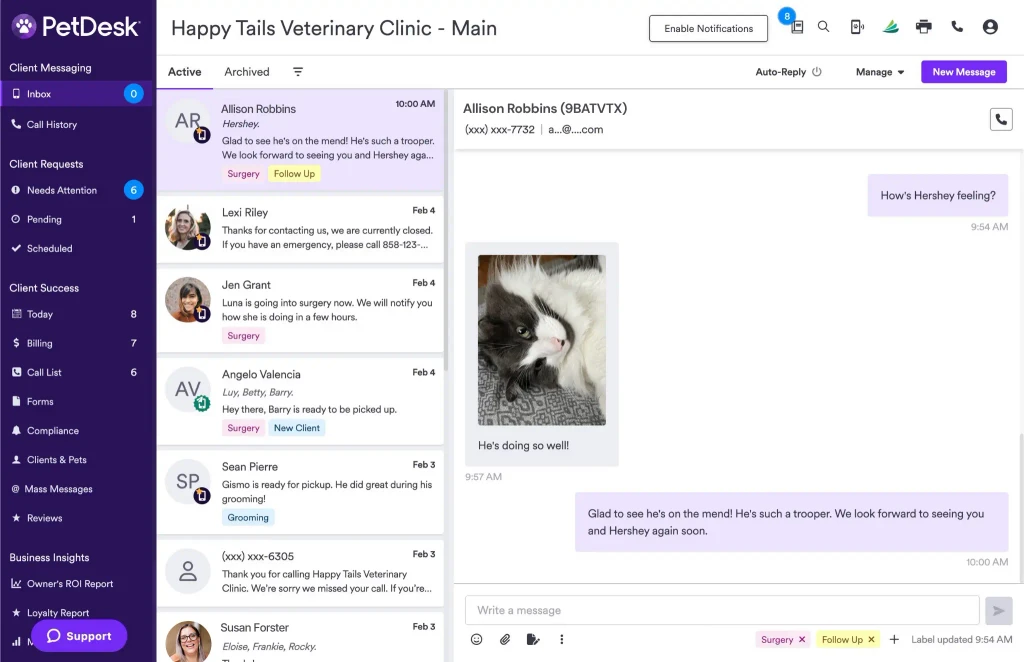
Two-way texting, paired with online booking software, takes the impact further. When clients can text a quick question instead of calling (and get a real answer from your team when they're ready), inbound call volume drops again. Routine questions about appointment times, prescription pickups, and post-visit instructions move to a familiar channel that your staff can manage at their own pace, without the costly interruption of a ringing phone.
The goal isn't to replace human connection. Veterinary care is built on it. The goal is to make sure that human connection is available for the moments that actually need it—and that your team isn't spending it on hold music.
Fill your calendar while you sleep
Give pet parents the convenience they crave with 24/7 online booking that writes directly back to your PIMS. Reduce phone fatigue and eliminate double-bookings with a smart, rules-based system that stays in sync with your real-time availability.